The Firefighting Trap: When Strategy Becomes Tomorrow's Problem
Updated: Jan 11
It's Monday morning. You had planned to spend this week thinking strategically—maybe revisiting your theory of change, or finally having that board conversation about sustainability. But then a donor needs an urgent report. A program partner has a question that can't wait. Two staff members need guidance on decisions that affect beneficiaries today.
Strategic planning moves to next week. Again.
If this sounds familiar, you're not alone. And more importantly, you're not failing.
The Structural Trap
Here's what we've observed across non-profit organizations throughout Asia: the same people responsible for executing programs are often also responsible for providing strategic direction. When you're the executive director who needs to both review that donor report and think about organizational direction for the next three years, execution wins every time.
It's not a choice—it's structural reality. Execution is urgent, visible, and clearly tied to survival. Strategy feels like a luxury you'll get to when things calm down.
Except things never calm down.
This creates what we call the firefighting trap: without strategic direction, you're constantly responding to crises. But responding to crises means you never create space for strategic direction. The cycle perpetuates itself.

Over time, firefighting becomes the organizational culture. Planning feels uncomfortable, almost indulgent. The question "should we even be doing this?" gets replaced by "how do we keep this going?"
The Real Cost
What does this cycle actually cost?
Not in theory, but in the day-to-day reality of your organization, you might see the following signs:
Opportunities missed because you couldn't evaluate them against any clear strategy
Donor relationships strained because your story keeps shifting with each new urgency
Staff exhausted because priorities change constantly and the finish line keeps moving
Programs that continue simply because they exist, not because they still serve the mission most effectively
The organization you could be building isn't getting built, because you're too busy maintaining the one you have
Perhaps most costly: you're working incredibly hard but having the sense that the work is not always on the most important things. The urgent crowds out the important, day after day, month after month.
One Question Worth Asking
Here's the question that keeps coming back to us in conversations with non-profit leaders:
If nothing changes—if the current pattern continues—where will your organization actually be in three years?
Not where you hope to be. Not where your mission statement says you should be. Where the current trajectory—the firefighting, the reactive decisions, the postponed strategic conversations—will actually take you.
Because here's the uncomfortable truth: you're going somewhere whether you plan it or not. Without intentional direction, you're still making choices. You're just making them one fire at a time, without seeing how they connect to anything larger.
Breaking the Pattern (Starting Small)
In our previous post, "From Intention to Action: A Practical Guide to Building Strategic Capacity," we explored why strategic capacity matters and how organizations can start building it. We talked about governance, financial systems, and evaluation frameworks.
But we kept hearing a version of the same question: "This all makes sense, but how do we actually start when we're already overwhelmed?"
Fair question. And the answer isn't "do comprehensive strategic planning" or "hire a consultant" or "clear your calendar for a week."
The answer is much simpler: Start with two hours a month.
Not two hours of planning the next program. Two hours of stepping back and asking: Are we building toward the right thing? Are we spending our limited capacity on what matters most? What keeps coming up as a problem but never gets addressed?
This isn't comprehensive strategic planning. It's creating space for strategic thinking. And that space—between the crises—is where strategy actually lives.
A Practical Starting Point
We've created a simple template for exactly this purpose: a monthly strategic check-in that takes about two hours and helps you break the firefighting pattern.
It includes eight focused questions across three areas:
Reality check: How did we actually spend our time? Were we mostly reactive or mostly strategic?
Direction check: Are we still building toward the right thing? What should we stop or start?
Capacity check: What recurring issue never gets addressed? What would have the biggest impact if we strengthened it?
The template ends with one concrete output: a single strategic priority for the coming month, with clear accountability for follow-through.
What This Actually Looks Like
Here's what we're not suggesting:
Abandoning program work for planning
Creating elaborate strategic plans
Adding another bureaucratic process
Ignoring urgent needs when they arise
Here's what we are suggesting:
Block two hours monthly for strategic thinking
Have your board or a colleague hold you accountable to protecting that time
Use a simple framework (like this template) to structure the conversation
Start with honest reflection about where you are and where you're headed
Make one strategic decision per month, even if it's small
Over twelve months, that's twelve strategic decisions you made intentionally rather than reactively. Twelve times you asked whether you're building the right thing. Twelve opportunities to address that recurring issue that never seems to get fixed.
That's not comprehensive strategic planning. But it's infinitely better than none.
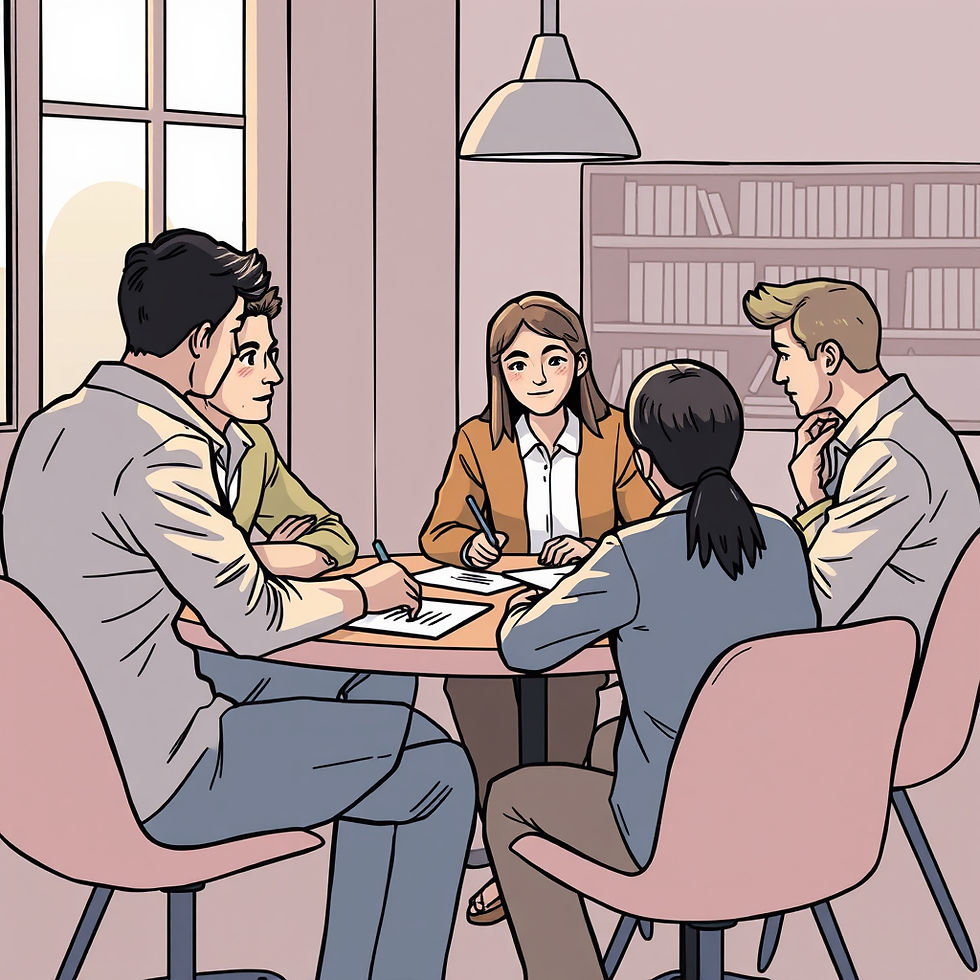
The Choice
The firefighting will always be there. There will always be urgent needs, unexpected crises, and demands on your time that feel non-negotiable.
The question isn't whether those needs exist—they do and they matter. The question is whether urgent needs are all you respond to, or whether you also create space for important-but-not-yet-urgent work.
Strategy lives in that space. And without it, tomorrow's crises multiply.
You don't need to solve everything this month. But you do need to start.
What would it look like to block two hours this month for strategic thinking? Not planning the next program, but asking honestly: Are we building the organization our mission needs? Is how we're spending our capacity actually moving us toward that?
The template is designed to make this as simple as possible. Eight questions. Two hours. One priority decision.
Start there.
Because if you don't choose where you're going, the firefighting will choose for you. And three years from now, you'll wonder how you ended up somewhere you never intended to be.
Related Resources:
